Address

2301 Av. D'Estimauville,
Québec, Qc G1E 1T2

Email

laboratoireparole@crulrg.ulaval.ca

Call Us

418-821-1229

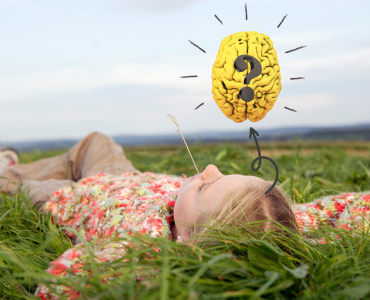
When you are doing nothing, thinking of nothing, and letting your brain have a rest, does your brain really “turn off”?
Our laboratory has just published a systematic review of the literature and meta-analysis related to this question in the journal Current Research in Neurobiology. This study was part of Elisabeth’s master’s project and was carried out under the supervision and with the help of Pascale, director of the lab.
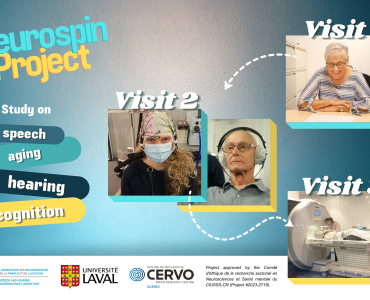
The first study of our most recent research project (NeuroSPiN), funded by the Canadian Institutes of Health Research (CIHR), has officially started!
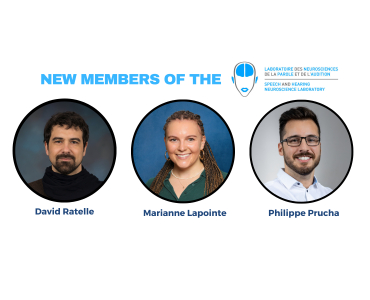
This winter semester, new members are joining the team!
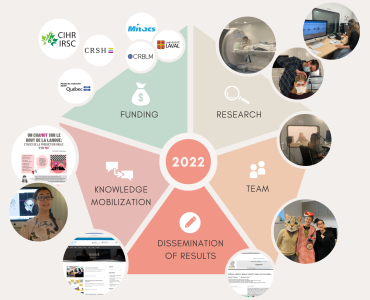
The new year is an opportunity to make resolutions, but also to take stock of the one that has just ended.
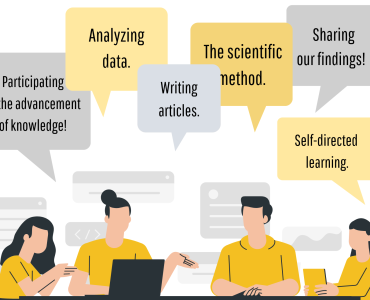
That's the question we asked our team this week. Their answers vary, but highlight one common trend: everyone is driven by the desire to contribute to the advancement of knowledge! 📖
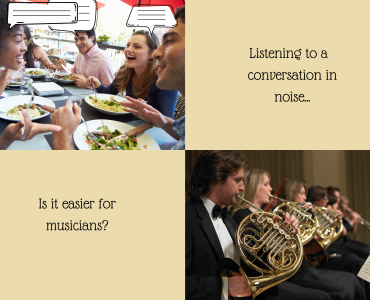
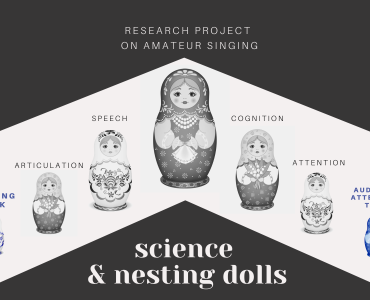
Are there benefits associated with practising singing at an amateur level? For example, do people who sing in a choir articulate more clearly, more quickly, or have better auditory attention? Do these beneficial effects mitigate the effects of aging on communication and cognition?
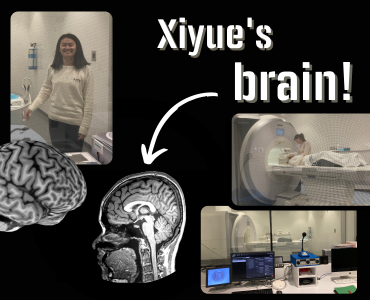
This afternoon, we collected the first pilot data of our "NeuroSpiN" project (CHIR) with the new Siemens 3T scanner which allows us to collect very high quality images 🔎🧠
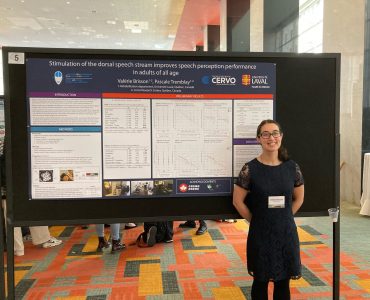
Last week, Pascale and Valérie attended an event that we no longer dared to hope for... a face-to-face conference!
In the first two posts of this series, we discussed the anatomy of the human brain, and more broadly, the anatomy of the central nervous system (CNS). In this third and final post, we discuss the functional organization of the brain, that is, how the brain accomplishes various functions such as processing information from sensory receptors (e.g., ears, eyes , etc.), talking, or controlling body movements.