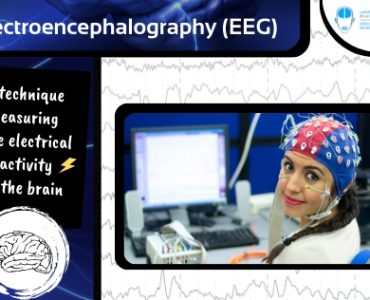
Electroencephalography is a technique that measures the electrical activity generated by large populations of neurons through electrodes placed on the scalp.
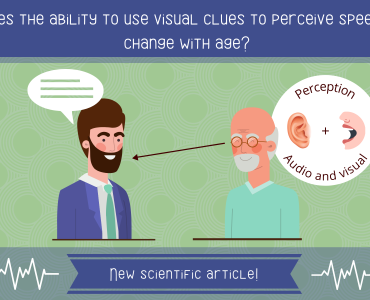
The influence of visual information on speech perception is well known. For example, when we are in a noisy environment, lipreading makes it easier to understand speech.
On June 8, Pascale Tremblay, director of the laboratory, spoke with Stephen Wilson, a professor at Vanderbilt University, Tennessee, USA, as part of The Language Neuroscience Podcast, hosted by Professor Wilson.
Several mad scientists have struck our imagination with their science experiments that had catastrophic consequences. Think of Doctor Frankenstein, who gave life to a monster made from human remains, Doctor Octopus whose body was fused to mechanical arms, or Doc Brown, who accidentally made Marty McFly travel back in time!
If you listen to Quebec Prime Minister Legault's press briefings on television, you may have noticed the presence of sign language interpreters. Has your curiosity been piqued by this language? Have you wondered what it must be like to live with deafness?
The results of a scientific study indicate this, those of another study rather suggest that, a third study supports the opposite... scientific literature can sometimes seem contradictory. What’s more, not all studies are of the same quality! How do you navigate all of this?!
Is a speech-language pathologist (SLP) someone who helps children who have difficulty speaking? Yes, but the field of expertise of SLPs is far from being limited to this!