Address

2301 Av. D'Estimauville,
Québec, Qc G1E 1T2

Email

laboratoireparole@crulrg.ulaval.ca

Call Us

418-821-1229

Speech production – the act of speaking – is a process so ingrained in us, so effortless, that we forget its great complexity. If 26 muscles are needed only to smile, you can imagine the number required to pronounce the syllables of a complex sentence. About a hundred!
In this blog post, we’ll present to you a lab paper on aging and singing that has appeared in the journal Human Brain Mapping!
When you read the sentence 'I ride my bike', do you feel like you’re on a bicycle? Not really, but unconsciously, certain regions of your brain related to movement actually get activated!
In this post, we offer you a virtual tour of our lab and its soundproof room at the CERVO Brain Research Centre!
In the experiments conducted in the lab, we frequently use non-words, that is, made-up words. For example, we may ask participants to repeat invented words they hear through headphones out loud, or to determine if two non-words are identical. But why not use real words?!
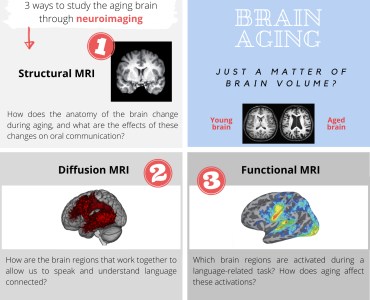
Many of us have seen an image comparing the brain of a young person to that of an elderly person. At a glance, it's possible to observe the loss experienced by the brain in the course of normal aging. This decrease in brain volume, including gray matter, i.e., the bodies of neurons, is associated with the decline in cognitive and language functions during aging. But is it just a matter of brain volume?
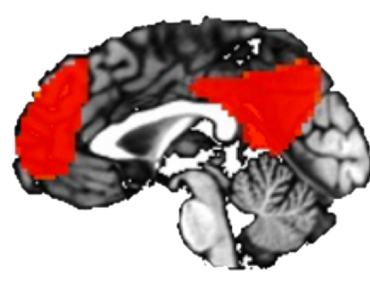
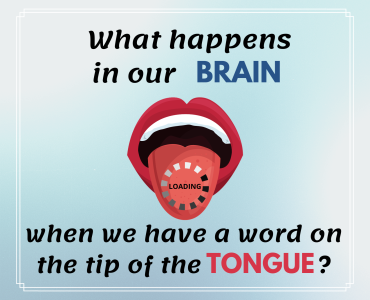
Isn’t it frustrating to have a word on the tip of the tongue? Although we know everything about it, the word keeps escaping our mind anyway. Talking is usually accomplished so easily that we forget how complex it is. However, it is at the same time a precise sensorimotor and cognitive task. In a previous publication, we explained that about a hundred muscles are required to produce a single sentence! At the sensorimotor level, talking is surely complex. But in order to produce a word, first we must find it!
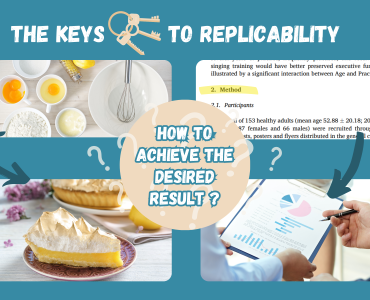
Have you ever tried to reproduce a recipe from your grandmother but couldn’t achieve the same result as her? If so, it may be a sign that your grandmother's recipe is not easily replicable. In science, the same problem can arise with a study.
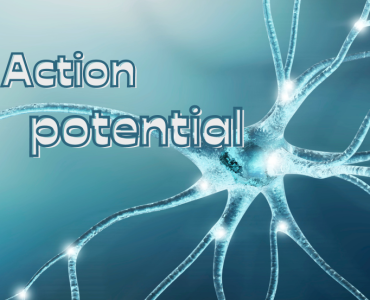
How can neurons generate electrical signals? Some time ago, we wrote that neurons communicate using electrical and chemical signals. We also mentioned that neurons generate electrical impulses at the level of their soma, that is, their cell body, which then propagate to their terminal buttons. In this blog post, we explain how these electrical impulses, called "action potentials", are produced.

Do you want to read a scientific article, but you are not used to reading one, or maybe have never read one? Does the article seem long and full of technical terms? Do not panic! All of our lab members had to read their first scientific article at some point, and then several others in fields that were less familiar to them. So, here are some pro tips (and pro-to-be tips!) to help you understand any scientific article you’re interested in.