PICCOLO projects in picture. Part five : sub-cortical attention network
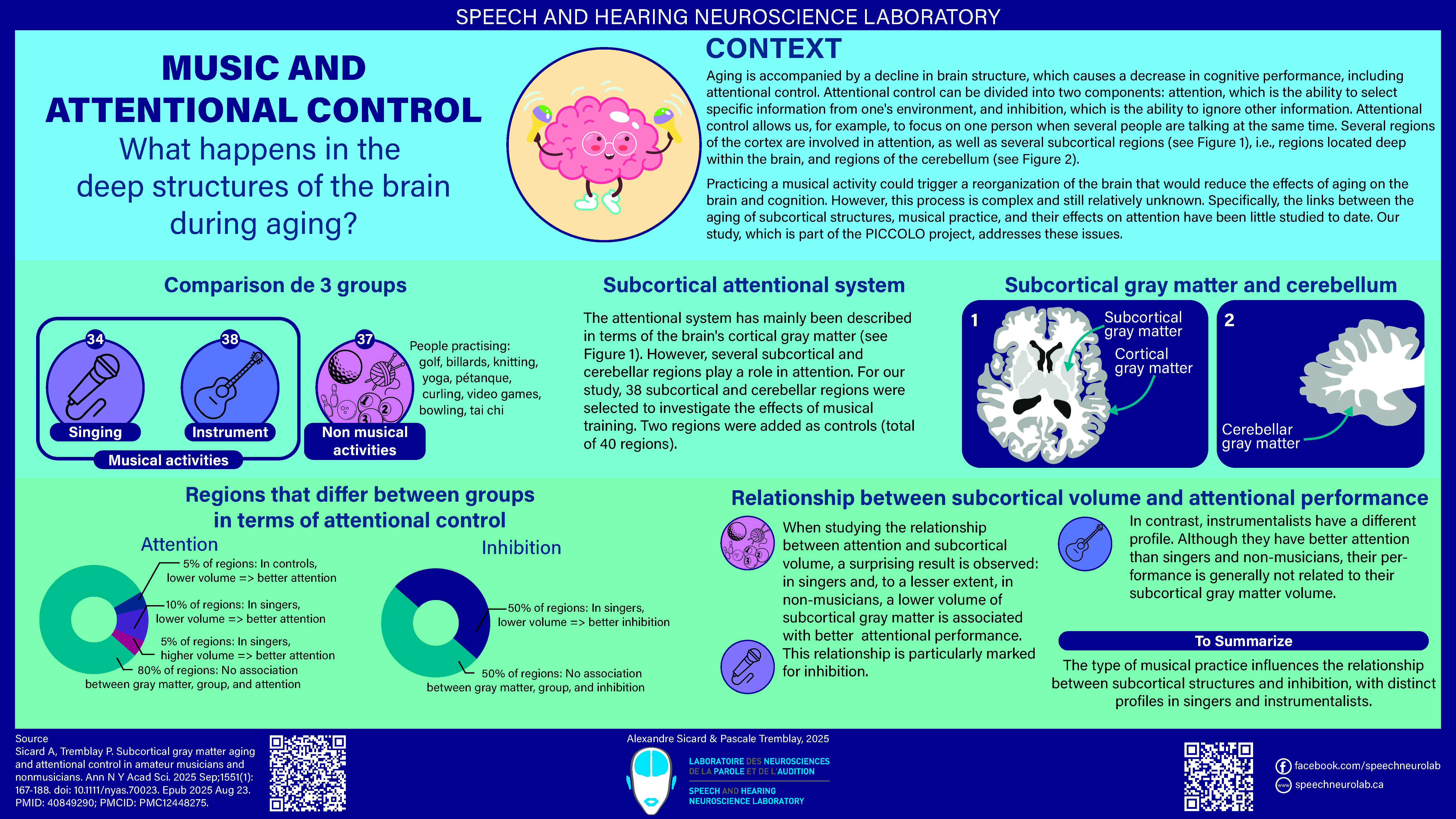
We are pleased to present this week the fifth in a series of infographics aimed at sharing the results of our research project on the effects of Instrument Practice or Singing on COgnition, Language and brain Organization: project PICCOLO.
In this infographic, we highlight the results of the fifth study from the project. This study, recently published in the prestigious journal Annals of the New York Academy of Sciences, an interdisciplinary journal, was conducted by Alexandre Sicard, a PhD student in our laboratory, and Pascale Tremblay. Click here to read our blog post presenting the project.
Our previous study showed that amateur musicians performed better than non-musicians on specific cognitive tasks, particularly those measuring inhibition and working memory, although these advantages were not global. In the present study, we examined the relationship between brain aging, more specifically the subcortical areas forming the attention network (basal ganglia, thalamus, amygdala, cerebellum) and attentional abilities in adults practicing musical activities or not, focusing on brain plasticity mechanisms. To learn more about brain organization, see our publication on this topic here.
Our results show an age-related decline in almost all subcortical structures analyzed. Contrary to the initial hypothesis, musical practice did not reduce this age-related subcortical decline. Only 5 structures out of 40 showed differences between groups: the bilateral ventral lateral nucleus of the thalamus, right putamen, right medial geniculate nucleus of the thalamus, and the left lobule VIIIA of the cerebellum. Despite the absence of major volumetric differences, the relationships between subcortical volume and attentional control differed across groups. In singers, the results are consistent with the ERM (Expansion-Renormalization) model: better performance is associated with smaller volume. In controls, the results are consistent with the brain reserve hypothesis: better performance is associated with larger volume. Finally, in instrumentalists, no clear pattern was found.
Plasticity mechanisms appear to be specific to the activity practiced rather than to specific brain regions. This observation is confirmed both at the cortical (previous study) and subcortical levels. Overall, subcortical structures were more strongly associated with inhibition (measured with the CWIT test) than with auditory selective attention (measured via the TAiL test).
In summary, this study suggests that practicing a cognitive-motor activity (musical or not) leads to circumscribed brain reorganizations rather than global protection against subcortical aging. The differences are found mainly in brain-behavior functional relationships rather than in structural preservation.
 Check out into our visual to discover how practicing musical activities modulates the subcortical attention network!


You can download the infographics as a PDF file by clicking here.
To learn more about this study, read the scientific article itself here.
Happy reading!